
Advanced Gas Turbine Engine Technologies: Fueling the Future of Power
Gas turbine engines power everything from commercial aircraft to industrial plants and play a key role in both economic and national security. This course looks at how these engines function, their strategic importance, and the technologies shaping their future in commercial and defense sectors.
What you will learn
-
Learn the principles and mechanics of gas turbine engine operation.
-
Understand the environmental and economic impacts of advanced gas turbines.
-
Examine the latest advancements and innovations in turbine technology.
Course content
Introduction to Gas Engine Turbines
Cover the basic principles and components of gas turbine engines. Explore the use of gas turbine engines in aviation.
Industrial & Maritime Applications
Explore the industrial and maritime applications of gas turbine engines.
Commercial and Policy Implications
Learn from policy and industry experts on the opportunities and risks of gas turbine engine technology in aviation, maritime, and energy fields.
Your Course Director
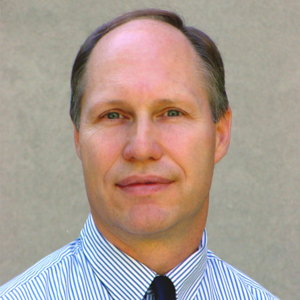
Dr. Robert P. Lucht
Distinguished Professor of Combustion in Mechanical Engineering at Purdue University and the Director of the Maurice J. Zucrow Laboratories
Robert P. Lucht is the Ralph and Bettye Bailey Distinguished Professor of Combustion in Mechanical Engineering at Purdue University and the Director of the Maurice J. Zucrow Laboratories. He received a BS in nuclear engineering (1977) and an MS (1979) and PhD (1981) in mechanical engineering, all from Purdue University. His present research activities include fundamental experimental and theoretical studies of femtosecond and nanosecond coherent anti-Stokes Raman scattering (CARS), two-photon absorption, polarization spectroscopy, the application of dual-pump CARS and other laser diagnostics for measurements in combustion systems ranging from laboratory flames to gas turbine combustion test rigs, and the development and application of diode-laser-based sensors for ultraviolet and infrared absorption measurements.
He has authored or co-authored over 170 articles in archival journals, and advised or co-advised more than 35 PhD students. He is a Fellow of the Optical Society of America, the American Society of Mechanical Engineers, and the American Institute of Aeronautics and Astronautics. In 2008 he received the AIAA Aerodynamic Measurement Technology Award, and in 2013 he received the Excellence in Research Award from the College of Engineering at Purdue University.