
Navigating Tomorrow: Exploring the Frontiers of Autonomous Systems
Autonomous systems are becoming more common in fields like transportation, healthcare, and agriculture, raising important questions about safety, privacy, and accountability. This course covers the core technologies behind these systems and examines their potential benefits, risks, and broader societal impacts.
What you will learn
-
Understand the core technologies behind autonomous systems.
-
Discuss the ethical, legal, and social implications of autonomous technologies.
-
Examine the application of autonomous systems in various sectors.
Course content
Introduction to Autonomous Systems
Explore the basics of autonomy and its applications in commercial and military contexts.
Fundamental Tech of Autonomous Systems
Learn about the fundamental technology of autonomous systems and explore potential future developments.
Policy and Commercial Implications
Learn from policy and industry experts on the opportunities and risks of autonomous systems.
Your Course Director
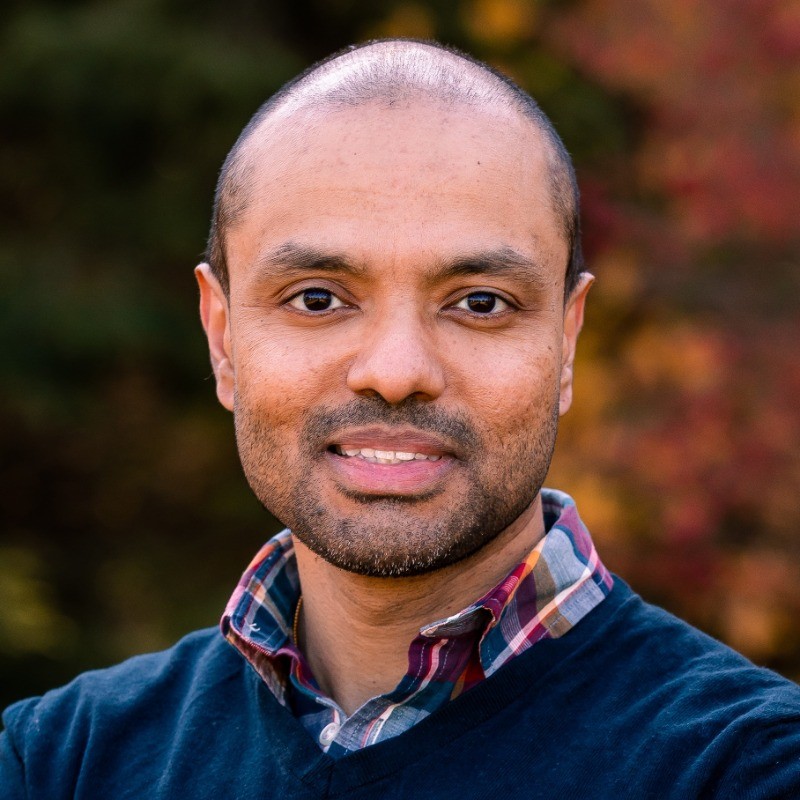
Dr. Shreyas Sundaram
Marie Gordon Professor of Electrical and Computer Engineering
Sundaram’s work lies at the intersection of Network Science, Control, Communications, and Distributed Algorithms. In particular, his research focuses on the analysis of dynamics on large-scale networks. These networks are prevalent in both the natural world (e.g., genetic networks, ecological networks, social networks), and in engineered applications (e.g., the Internet, the power grid, industrial control networks, large robotic swarms). In these settings, it is essential for the overall system to be resilient to components that behave in unanticipated, incorrect, or malicious ways. Understanding the behavior of these complex systems requires us to consider both the network topology (i.e., who interacts with whom), and the network dynamics (i.e., what happens when two nodes interact).
Drawing from diverse disciplines, Sundaram develops novel and mathematically rigorous techniques for designing reliable networks of dynamical systems. Sundaram obtained his PhD from the University of Illinois at Urbana-Champaign in 2009, was a faculty member at the University of Waterloo until 2014, after which he came to Purdue. He became a tenured Associate Faculty in August 2018. En route, he won the National Science Foundation CAREER Award in 2017 for his project titled "Towards Secure Large-Scale Networked Systems: Resilient Distributed Algorithms for Coordination in Networks under Cyber Attacks". He also won the U.S. Air Force Research Lab Summer Faculty Fellowship in 2016.