
Securing Global Food Supplies: Innovations in Agriculture Technology
Food security remains a global challenge shaped by agricultural practices, technology, and policy. This course looks at the key drivers of food insecurity and presents practical approaches for building more resilient and reliable food systems.
What you will learn
-
In this course, you will explore the landscape of global food security. What is essential to guarantee food security, and what factors pose challenges to it?
-
Throughout the course, you will gain an understanding of these technologies, covering their functionality, policy implications and industry-wide ramifications.
-
You will discover how technologies, including precision agriculture, traceability and cellular agriculture, can serve as solutions to global food security challenges.
Course content
Introduction to Global Food Security
Explore the landscape of global food security, including what it takes to guarantee food security and the forces challenging food security, including population growth, climate change and economic disparity.
Innovation in Agriculture Technology
Examine the potential of precision agriculture and traceability in optimizing conventional agriculture for global food security.
Cellular Agriculture
Explore the potential of cellular agriculture as an innovative solution to global food security challenges.
Your Course Director
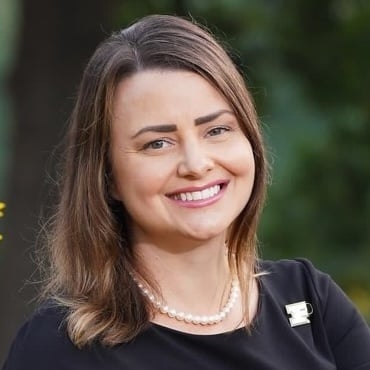
Dr. Haley Oliver
Vice Provost for Graduate Students and Postdoctoral Scholars, the 150th Anniversary Professor of Food Science at Purdue University, and Sr. Research Fellow at the Krach Institute for Tech Diplomacy at Purdue
Dr. Oliver leads efforts across Purdue’s West Lafayette and Indianapolis campuses to support the success of graduate students, professional students, and postdoctoral scholars. Her leadership roles have included Assistant Dean of Ag online programs and Director of the USAID Feed the Future Food Safety Innovation Lab. An internationally recognized expert in food safety, Oliver’s research addresses the behavior of foodborne pathogens like Listeria and Salmonella in food systems, with a focus on practical strategies to reduce contamination. She has worked extensively in developing countries and led food safety capacity-building efforts in Afghanistan.
Dr. Oliver’s domestic research focuses on foodborne pathogens in emerging food systems (e.g., cellular agriculture) with an emphasis on practical and feasible control strategies. Her contributions to teaching, research, and service have earned her numerous honors, including the USDA John Morrill Award, the APLU Excellence in Teaching Award, and Purdue’s Corinne Alexander Spirit of the Land-Grant Mission Award. She completed her Bachelor of Science degrees in Molecular Biology and in Microbiology at the University of Wyoming and received her PhD in Food Science, with minors in Epidemiology and Microbiology, at Cornell University.